

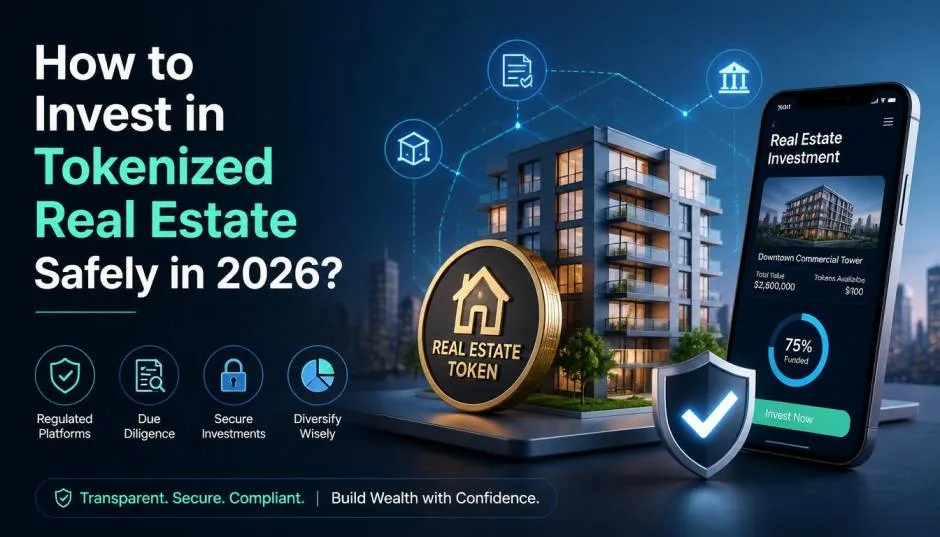
How to Invest in Tokenized Real Estate Safely in 2026?
I nearly lost $5,000 last year. A friend told me about a "revolutionary" real estate tokenization platform. Great returns. Low minimums. Sounded perfect.
I did zero research. I just clicked "buy."
Three months later, the platform vanished. The website went dark. My tokens became worthless. The property never existed.
That mistake cost me money and taught me a brutal lesson. Tokenized real estate offers incredible opportunities. But the space is still messy. Bad actors exist. You need to protect yourself.
Here is what I learned after that expensive failure. No hype. Just practical advice from someone who made the mistakes so you do not have to.
What Real Estate Tokenization Actually Is?
Real estate tokenization converts property ownership into digital tokens on a blockchain. Each token represents a small slice of the property. You buy tokens. You own a fraction.
Read Also: Smart Building Property Tech: Transforming Commercial Real Estate Asset Valuation
This changes everything. Traditional real estate required huge capital. Tokenization lets you start with $50 or $100. You get rental income proportional to your tokens. You benefit from property appreciation.
The market is growing fast. Over $356 million in tokenized real estate assets exist across 57 properties in ten countries. Deloitte predicts tokenization will reach $4 trillion by 2035.
But here is the catch. Most tokens represent ownership in a Special Purpose Vehicle (SPV), not direct title to the property. The SPV owns the building. You own shares in the SPV. This protects you if the platform goes bankrupt. But it also means you have no direct claim on the property itself.
The Two Models: Direct vs Indirect Ownership
Two tokenization models exist. Each carries different risks.
Model 1: Direct tokenized title. The token itself represents legal title to the property. This is what most people imagine. It rarely works in practice. Property law requires deeds. Recording systems cannot handle bearer instruments. Courts have not fully accepted this model.
Model 2: Indirect ownership through SPVs. This is the industry standard. The platform creates a company that owns the property. You buy tokens representing shares in that company. This structure is legally sound. But it transforms the investment from property law to securities law. You lose the protections of mortgage law. No judicial oversight. No redemption periods. No consumer safeguards.
What this means for you: Always ask which model the platform uses. Insist on the SPV model. It is legally tested. Direct title tokenization remains unproven.
Red Flags I Learned to Spot
After my loss, I identified warning signs. Watch for these carefully.
Property claims without evidence. I see platforms tokenizing run-down houses nobody wants. They get funding. Then the asset fails to generate returns. Ask for property valuations. Ask for inspection reports. Demand evidence.
You Must Also Like: How to Get Into Flipping Houses: Beginner Guide 2026
Tokenization hype without substance. Some developers use crypto language to dress up mediocre investments. They say "blockchain-powered" and "revolutionary" but cannot answer basic questions. The underlying asset still determines returns. Not the technology.
No legal structure. Legitimate platforms use SPVs and proper securities frameworks. If a platform cannot explain its legal structure, walk away.
Unrealistic returns. Tokenized real estate offers solid passive income. But returns should align with market rents. Anyone promising 20% annual returns is lying.
Shady platform names. RealT faced lawsuits for raising millions for Detroit properties it did not own at the time of sale. Research every platform thoroughly.
How to Choose a Safe Platform in 2026?
Pick platforms that demonstrate these traits. I use this checklist after every loss.
Regulatory compliance. Look for platforms that follow securities laws. In India, fractional ownership platforms must register as Small and Medium REITs (SM REITs). The US requires compliance with Regulation D or Regulation S exemptions. Europe follows MiCA and MiFID II rules.
KYC and AML procedures. Legitimate platforms verify investor identities. If a platform lets you buy tokens without submitting ID, that is a major red flag. Compliance is not optional.
ERC-3643 standard. This is the gold standard for compliant tokens. It builds identity management into the smart contract. Tokens can only transfer to verified wallets. Issuers can claw back tokens if a court orders seizure. This protects you if something goes wrong.
Third-party audits. Smart contracts should be audited by independent firms. Ask for the audit reports. If they cannot provide them, do not invest.
Secondary market access. Liquidity matters. Some platforms offer bulletin boards for peer-to-peer trading. Others provide regulated exchanges. Without secondary markets, your tokens are locked until the property sells. That could take years.
Track record. Look at completed projects. Not promises. RealT has tokenized multiple properties. GAIA launched in December 2025 with a $52 million portfolio. Proven execution matters more than bold claims.
My Recommended Platforms
I tested several platforms. Here are the ones that passed my checklist.
Securitize leads institutional tokenization. It manages over $1 billion in assets and is backed by BlackRock. The platform focuses on compliance and secondary trading through its regulated alternative trading system.
RealT specializes in US rental properties. You buy tokens representing shares in income-producing homes. Rental income distributes in stablecoins each week. It provides solid passive income for smaller investors.
GAIA launched recently for institutional US real estate. The platform supports stablecoin and wire transfers. Minimum investments start at $100. It includes an OTC bulletin board for secondary trading. GAIA also offers staking rewards for token holders.
NOVA by Headway operates a mobile app for tokenized real estate. Minimum investment is $50. The platform handles property management. It uses the Ethereum blockchain with regulatory oversight from the Financial Sector Conduct Authority.
DigiShares provides white-label solutions for real estate tokenization. It launched RealEstate.Exchange in Q1 2025 for secondary trading. The platform integrates with KYC providers and custody partners.
These platforms differ in focus. Securitize serves institutional investors. RealT and NOVA target retail. GAIA focuses on US markets.
The Hidden Legal Risks
Here is what most platforms do not tell you.
Tokenization does not eliminate risk. Investors still need old-fashioned due diligence. The same securities laws apply. Fraud is still fraud. Blockchain does not protect you from bad deals.
Enforceability of smart contracts remains untested. Courts are still developing approaches to code-based obligations. Errors in code can trigger disputes. Legal systems do not always treat smart contracts as binding.
Insolvency creates complexity. If a tokenization platform becomes insolvent, questions arise. Do token holders have direct property rights? Or just contractual claims against the platform? The answer varies by jurisdiction. This uncertainty makes recovering funds difficult.
Cross-border disputes are messy. Tokenized assets sit across multiple jurisdictions. Is a dispute a matter of property law, contract law, securities regulation, or technology governance? The answer is rarely straightforward.
Minority investors struggle. Tokenization enables fractional ownership at scale. But large numbers of retail participants have limited visibility over asset management. Disagreements over voting, distributions, or management decisions create risks. Minority token holders may find it hard to assert their rights.
Steps to Protect Yourself
After my loss, I follow this process every time.
Step 1: Research the platform. Check regulatory status. Read complaints. Look for lawsuits. Search the founders' names. Bad actors leave trails.
Step 2: Verify the property. Demand property valuations. Request inspection reports. Check occupancy rates. Understand rental income history. If the platform cannot provide these, walk away.
Step 3: Read the legal documents. Yes, the boring ones. Understand the SPV structure. Know your rights as a token holder. Check the governing law and jurisdiction. If a dispute arises, you need to know where to sue.
Step 4: Understand your exit options. Does the platform offer secondary trading? How long until you can cash out? Are there restrictions on selling tokens? Do not invest money you might need soon.
Step 5: Start small. My first investment was $5,000. It vanished. Now I start with $100. I test the platform. I verify claims. I only scale up after positive results.
Step 6: Use regulated platforms. Compliance costs money. Platforms that cut corners on regulation expose you to risk. Pay the premium for proper compliance.
The Final Thoughts
Tokenized real estate is not a get-rich-quick scheme. It is an investment. Like any investment, it carries risks.
The technology is exciting. It democratizes access to property. But the legal infrastructure is still developing. Regulators are catching up. Clearer frameworks are emerging in the US, Europe, and India.
My advice after losing money: Treat tokenized real estate like any other investment. Research everything. Verify every claim. Start small. Use compliant platforms. Understand your risks.
The rewards can be solid. Passive rental income. Property appreciation. Low minimums. But the risks are real. Bad actors exist. Legal uncertainties remain. Due diligence is not optional.