


The Hidden Costs of Buying Property in Europe: What They Don't Tell You?
I watched a friend budget for a Spanish apartment using only the listing price. He was short by nearly €18,000 when the final bill arrived. Not because he was careless.
Because nobody told him the transfer tax in his region was 10%, the notary fees were separate, and his lawyer charged a percentage of the purchase price, not a flat fee.
The hidden costs of buying property in Europe are not small print. They are the difference between affording the home and losing it at closing. Here is what the official guides and real transaction data actually say, country by country.
How to Buy Property in Europe: A Complete Guide
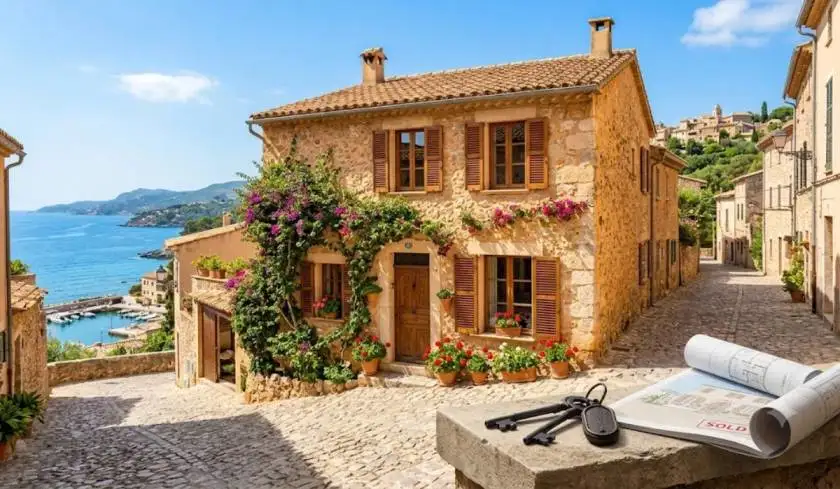
This is the biggest cost most buyers underestimate. Property transfer tax is a one-off fee paid when the purchase completes. Across popular European destinations, it typically ranges from 6% to 10% of the property price.
Read Also: Real Estate in Malta, Europe: Browse Verified Properties And Homes for Sale
But the range hides the pain. Spain is the worst offender in Western Europe. Transfer tax is set by region, not by the national government. Catalonia and Valencia charge a flat 10% on resale homes.
On a €300,000 apartment, that is €30,000 before you pay anyone else. The Balearic Islands can go higher, up to 13% depending on the property value.
Belgium is even more brutal. The standard registration fee is 12% in many regions. On a €300,000 home, that is €36,000. Flanders cut its rate to 2% for primary residences, and Brussels exempts the first €200,000 for eligible buyers.
But if you are buying in the wrong region, the tax alone can dwarf your down payment. Portugal sits at the other end. A flat 7.5% IMT applies to non-residents from September 2026, plus 0.8% stamp duty. Total buying costs land around 9% to 10%.
France looks moderate at first. Notaire fees, which include transfer tax and administrative costs, run about 7% to 8% on older homes and 2% to 3% on new builds. But those fees are not the whole story.
The Fees Nobody Warns You About
Transfer tax is the headline. The supporting cast is what empties your savings account.
Legal and notary fees. In France, a notary is legally required to oversee the sale. Their fees are bundled into that 7% to 8% figure . In Spain and Portugal, hiring a lawyer is not mandatory, but skipping it is reckless.
You need someone to check the title, confirm there are no unpaid debts attached to the property, and verify building permits . Budget 1% to 2% of the purchase price for this, sometimes more if the transaction is complex.
Estate agent commission. Here is where buyers get ambushed by country-specific rules. In Spain and Portugal, the seller pays the agent, typically 3% to 6% plus VAT. You, the buyer, usually owe nothing directly.
In Italy, both sides pay. The buyer’s share is 2% to 4% plus 22% VAT. That is a cost Spanish buyers never see . In France, the agent fee is often folded into the advertised price, but some mandates charge the buyer separately. Read the listing carefully before you assume the price is the price.
The Annual Costs That Never Stop
The purchase is a sprint. Ownership is a marathon. Most buyers focus on the sprint and forget the marathon.
You Must Also Like: The Cheapest Country in Europe to Buy Property for Residency 2026
Property tax varies by country and by how the local government assesses value. In Spain, IBI runs 0.4% to 1.1% of the cadastral value, which often sits below market price.
In France, taxe foncière can hit 1.0% to 1.8% of the rental value assessment . In Portugal, IMI is comparatively gentle at 0.3% to 0.8% of the tax-assessed value.
Then there are the costs specific to being a non-resident. Spain charges non-resident income tax on a deemed rental income, even if you never rent the place out. The rate is 24% on 1.1% of the cadastral value.
France has a wealth tax, the IFI, that applies to net property wealth above €1.3 million at 0.5% to 1.5% . Most buyers will not hit that threshold. But if you are buying in Paris or the Côte d’Azur, you might.
Insurance, utilities, and maintenance add another layer. A realistic year-one fixed cost for a European property runs €3,000 to €6,000, excluding repairs. Ongoing maintenance should be budgeted at 1% to 3% of the purchase price annually .
The Costs Specific to Foreign Buyers
If you are paying in dollars, pounds, or any currency other than the euro, currency risk is a real cost. A small exchange rate movement can add or subtract thousands from your final bill.
Using a bank for the transfer often means worse rates and added fees. A currency specialist can lock in a rate in advance.
Then there is the exit problem. Buying costs in Spain can reach 14% of the property price. Selling costs add another 3% to 6%. The roundtrip cost of buying and selling a Spanish property can hit 20%.
That means the property must appreciate by a fifth before you break even. In Italy, the roundtrip is 10% to 18%. In France, 4.7% to 14.1% . These numbers should be tattooed on the inside of every buyer’s eyelids.
The Final Thoughts
Do not budget from the listing price. Budget from the total acquisition cost. For Spain, assume 10% to 14% on top of the price. For France, 8% to 10%. For Portugal, 9% to 10%. For Italy, 7% to 15% depending on the region and whether you are a resident.
Get a written quote from a local lawyer before you make an offer. Not a verbal estimate. A written breakdown of transfer tax, notary fees, legal fees, and any agent commission you will owe. If the seller’s agent refuses to put it in writing, walk away.
And ask about the annual costs before you fall in love with the view. The property tax, the non-resident income tax, the insurance, the maintenance. The purchase is a moment.
The ownership is a lifetime. The hidden costs of buying property in Europe are hidden only because nobody asks the right questions until the bill arrives.